Professor Hou Zhuocheng Interprets the Group Standard on Intelligent Phenotyping Data Collection for Meat Poultry
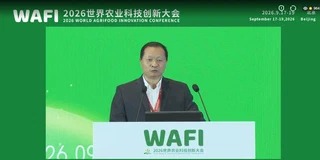
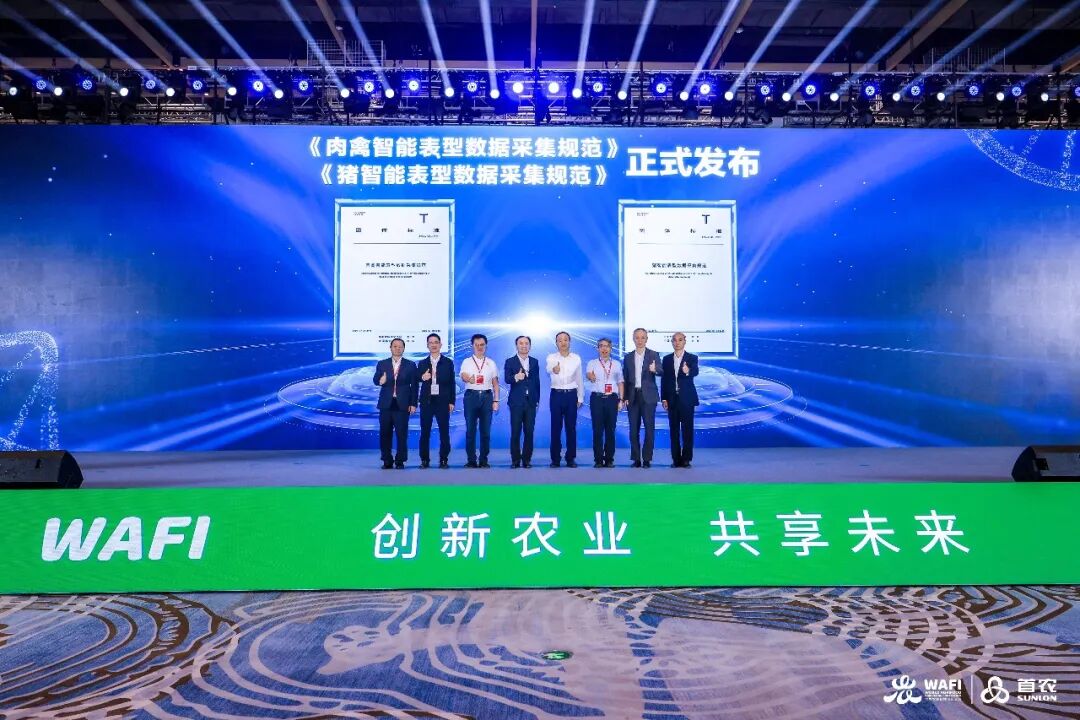
On 18 September 2026, the group standard Specification for Intelligent Phenotyping Data Collection in Meat Poultry, jointly compiled by eleven institutions led by Beijing Capital Agribusiness & Food Group together with China Agricultural University, Beijing Huadu Yukou Cherry Valley Breeding Company, Anhui Agricultural University and others, was officially released in Beijing. Professor Hou Zhuocheng of China Agricultural University was invited to give an authoritative interpretation of the standard.
Professor Hou has long been engaged in research on innovative genomic breeding technologies and the dissection of genetic mechanisms. He has led or taken part in the breeding of a number of new poultry varieties, and has been awarded the National Science and Technology Progress Award (Second Class) and the Beijing Science and Technology Progress Award (First Class), among other honours.
Professor Hou pointed out that poultry meat is China’s second-largest meat market by consumption, accounting for more than 28% of the total, with more than 17 billion birds marketed each year, and that over the next five years Asia, Africa and South America will remain the fastest-growing regions for meat poultry. Such a large industry requires a solid breeding foundation: the seed industry is the “chip” of agriculture, and benchmark phenotyping is the key to breeding work.
Traditional phenotyping, however, faces problems such as low efficiency, strong subjectivity, measurement errors of more than 15% for some traits, poor animal welfare and single-dimensional data, and can hardly meet the needs of high-quality, efficient and disease-resistant breeding. In recent years CT imaging and visual information technology have been widely applied in livestock and poultry breeding, but the lack of unified standards across the industry has produced large numbers of data silos.
Professor Hou explained that the standard consists of three core elements. First, it establishes a complete technical system for data collection, integrating CT imaging, B-ultrasound echo positioning, vision technology and RFID individual identification, so as to break through the limitations of single traits and form a multi-dimensional data collection system, in which the R² of CT technology is no lower than 0.9 and the accuracy of RFID identification exceeds 99%. Second, it establishes a full life-cycle workflow, integrating for the first time the entire process from equipment calibration, animal restraint, measurement and quality control to data processing and archiving management. Third, it establishes a standardised management technical system: structured data are stored in formats such as SQL, while unstructured data follow unified naming rules covering individual ID, collection time and device ID, enabling rapid retrieval and traceability; a data security management specification has also been established to prevent data leakage and safeguard core data assets.
Professor Hou noted that implementing this standard will improve the batch, continuous and non-invasive measurement of key data traits, reduce the stress caused to animals by handling such as capture, raise the level of animal welfare, promote the translation of intelligent phenotyping technology from the laboratory stage to industrial scale, and drive industrial upgrading. Intelligent breeding truly begins with intelligent phenotyping: this standard is a common language that brings together all the technologies involved, and a data foundation for the rapid development of the industry. He expressed the hope that the release of the standard will provide support for industry and enterprises and a starting point for peers, on which the community can continue to improve and develop together, jointly advancing research on intelligent phenotyping in livestock and poultry and the revitalisation of the seed industry.